THE NEW VFX SANDWICH: HOW AI IS REPRICING 'HIGH-END' VIDEO FOR BRAND
James Hilditch, founder and executive creative director at BearJam, believes that when cinematic video gets cheaper, core ideas matter more than ever.
Corporate video has always been a negotiation between imagination and gravity. You could write a brief that opened on a snow-swept mountain ridge, jumped to a futuristic data centre, then landed in a perfectly lit product universe, and everyone in the room would nod...right up until the costings arrived. Then the story quietly retreated to a safer place: an office, a talking head, a tasteful motion graphic. That mechanism is breaking.
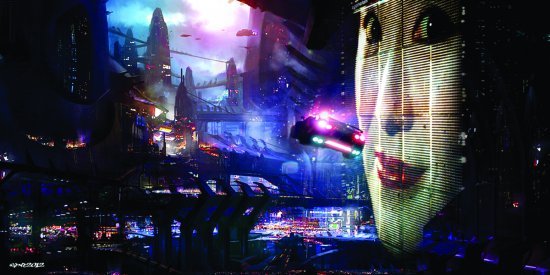
Generative AI is converging with CGI and traditional VFX in a way that’s dramatically reducing the time and cost of creating scenes and elements that once sat firmly in specialist post-production. The result is a repricing of visual ambition.
'High-end' is no longer an exclusive tier reserved for the biggest brands, longest timelines, or most forgiving budgets. More businesses can now commission work that looks cinematic, expansive and design-led, and still keep it within corporate comms realities.
For B2B marketers, this shift is more than a production upgrade. When 'looking expensive' becomes cheaper, it stops being the differentiator. A polished, premium aesthetic becomes the baseline, not the finish line. That’s exciting, but it also introduces a par dox: the same tools that lower barriers to cinematic visuals can flood the market with content that is technically impressive yet creatively empty. Glossy output is not the same as meaningful storytelling, and the rise of generative capability raises the risk of synthetic sameness.
This is where I think about the process as a sandwich. To avoid 'AI slop' and, frankly, to avoid any kind of marketing slop, you need a great idea at one end and great execution at the other. What AI is doing is speeding up the middle. The filling is getting faster and cheaper to produce, iterate and scale, but you still need quality bread.
In practice, AI is brilliant at getting you 80 per cent of the way there quickly. It can generate worlds, moods, and visual directions that would have taken days or weeks to concept, source or build. But the last 20 per cent is still where craft lives, and it’s the difference between good and great.
That final stretch is compositing, continuity, brand design integration, colour, sound and the discipline to fix the tiny breaks in reality that audiences detect instantly. It’s also knowing when a real element should anchor the piece, a human face, a product shot, an unscripted moment, so the work feels authentic rather than assembled.
We're also seeing a two-tier approach emerge. For some communications, 'good enough' is enough: fast-turn social, internal updates, event cutdowns. Here, AI-first can be a sensible choice, as long as it’s governed properly. But for brand-defining assets, the tolerance for oddness, uncanny detail, or visual shortcuts is effectively zero. A company asking an audience to trust its expertise cannot afford a video that subconsciously signals carelessness.
At BearJam, we’re building capability around this convergence. We’ve seen a clear increase in briefs that include AI elements, often because clients want to understand what’s now possible, what’s now sensible, and what’s now safe. The opportunity isn’t to replace VFX, it’s to offer a more cost-effective route to ambitious visuals, while keeping the work firmly on the right side of credibility.
The barriers are lowering. The middle of the sandwich is getting dramatically faster. But the best work will still be defined by the edges: the thinking at the start, and the craft at the end. And, if you’ll forgive the brand reference, a little bit of jam.